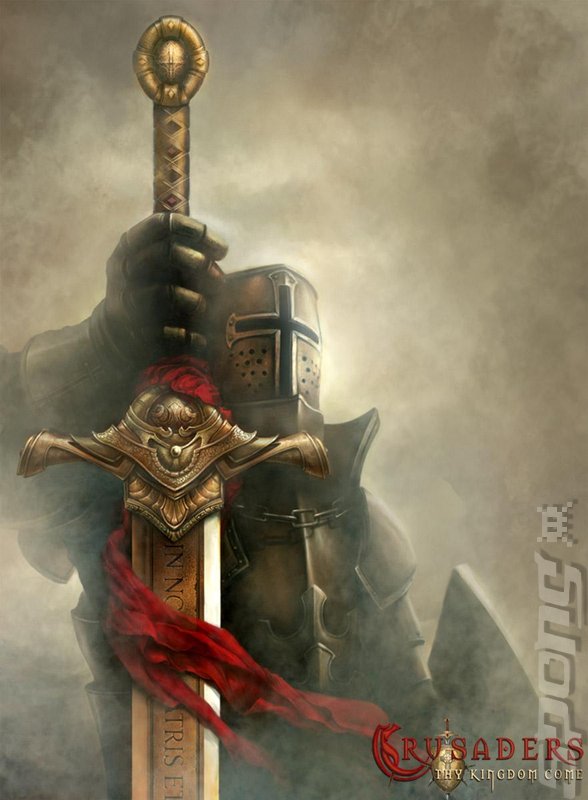
Showing posts with label Paladins. Show all posts

Saturday, March 9, 2019

Tidying the Paladin

As I'm working mostly on the wiki these days, crossposting here just follows ~ particularly when I am reworking very old files on the wiki that most are not likely to ever see.  The wiki just gets 65-100 page views a day, so I know people are not perusing every page.

On the side, I've been reformatting pages associated with Player Characters, perhaps because of my readings of 5th Edition.  I suppose I'm guilty of making boxes for character fluff in the way I've accused others of doing; I've tried to keep the prescriptiveness of what the classes mean to a minimum.  The bigger goal has been to make the content friendly, easy to use and more attractive.

I've worked up a front-page for the paladin at last, which has been a placeholder for several years, since I was still on the old wikispaces format.  I'm afraid some of the links are bound to disappoint; and there are back pages that need to be created: paladin's warhorse, holy weapons, that sort of thing.  But this is the endless battle where it comes to keeping up with all the content D&D demands.


PALADIN (class)

Known throughout the world as great warriors, whose exploits of valour in defence of god and duty have been the substance of many tales. Songs of their deeds have been written as epic poems, told by bards most any evening: Songs of William and Roland, Gormond and Isembart form the substance of many a young fighter’s dreams, as they hope to perform well at their lessons to be recognized for their skill at arms and their faithfulness.

Such peers are prepared with more difficult training to become paladins, pious warriors who bear a moral obligation as holy warriors for their religion. Whether acting on their own volition or as duly authorized combatants for the kingdom’s welfare, paladins are often idolized by honest citizens and deeply despised by chaotic elements.

Contrary to myth, paladins need not be honourable to generally held principles of goodness or law. Many defend the religious ideals of evil cults or religious beliefs whose indifference to concepts of justice and truth makes a paladin in their cause a truly feared villain. Characters must make up their own minds what sort of paladin they are; there are no set guidelines in the rules that insist what a paladin believes.

To Become a Paladin

The primary attribute of the paladin is strength.

To become a paladin, a character must have these minimums:

  • 12 strength
  • 9 intelligence
  • 13 wisdom
  • 9 constitution
  • 7 dexterity
  • 17 charisma


Multi-classed paladins must have a minimum strength of 16. To gain a +10% experience bonus, the paladin must have both a minimum strength and wisdom of 16. The table shown describes the necessary experience to claim each level of the paladin, gaining hit dice and further abilities. Each level above 12th requires 350,000 additional experience. Paladins gain 3 h.p. per level above 9th, but as this is not an increase in hit dice, further constitution bonuses are not accrued. Paladins cannot progress beyond 26th level. [experience table]

Paladins receive several benefits that no other class enjoys: ability to detect malevolence on a continuous basis; benefit of +2 adjustment when making saving throws; immunity from disease, and to cure disease in others, once a week to start (1st to 5th level), then twice a week (6th to 10th level), progressing at that rate until their maximum level.

Paladins also have the power to lay on hands, on others or upon their own person, granting 2 h.p. per level of experience, but one time per day. A continuous eminence of protection from malevolence surrounds the paladin, extending outwards for two combat hexes, that any ally of the paladin can enjoy if within that radius.

At 3rd level, paladins gain the ability to turn undead, though they lack knowledge in dweomercraft. At 4th level, the paladin may call for a paladin’s warhorse, which will behave like a loyal henchman towards the paladin.

Paladins begin to receive clerical spells at 9th level. They also possess unique combat abilities and sage abilities. Players wishing to become a paladin should familiarize themselves with these characteristics.

See Also,
Holy Weapons
Player Characters

Wednesday, November 9, 2016

Piety

My daughter's wedding is just two days away, Saturday, so things are scattered and far too busy to do any real work this week . . . so I am relaxing by kicking out a few things in the wiki.  I've finished the changes I intend to make to medicine at this time (I have no one above authority level in my games), so now I am working on a paladin skill, piety, chosen by a 6th level paladin in my game by the name of Zephan.

This surprised me a little, as the player who operates Zephan (my son-in-law as of this Saturday) is something of a munchkin.  Zephan is a phenomenal character, generated with four naturally rolled 17s, placed under strength, wisdom, dexterity and charisma.  It is particularly funny since, in more than 8 years of play, the fellow has never rolled an 18 for a character stat, not once.

However, reasoning that piety would be a way to round out the natural power of the character and produce opportunities, the player opted out of increasing power in favour of status.  I really respect that.  I have made a point of telling him so.

This brings us to the problem of how to create piety in a game setting without travelling down the road of telling players how to have their characters behave, something I simply don't do.  From the beginning I have allowed paladins to act as they will, trusting the terrific amount of experience needed to go up a level to restrain their awesome power ~ that, and not rushing to give them +5 holy swords any time before the 20th level.  In fact, I've only given one holy sword away in a campaign, to a 7th level; it was not in a campaign I am running now and the sword was merely +1, +2 against malevolent creatures.  The player was very happy and it did not upset the apple cart of the campaign.

As such, any sage ability the paladin possesses must fit two criteria: it must not function in a way that undermines the struggle of the players vs. their environment and it must allow for total free action and agency for the player running the paladin.

With this in mind, I have three new skills with which I will try to thread that needle.  I'll try to talk about the value and limitation of each.

Prostration is an act of demonstrating humility ~ which might mean any number of physical positions, depending on the part of the world and, of course, the religion of the paladin.  It is not an act of submission, but rather something like a proof of credit.  The paladin, through body language, tells witnesses that "I am to be trusted, my goals are your goals, my motives are pure."

The difficulty, of course, is that without the restriction of telling the paladin that they must actually BE pure, there's every opportunity for the paladin to gain the trust of others and then subvert that trust for cruel, unjust and certainly impious purposes.

Or is that really the case?  The issue here is not that the skill can be used to dupe a trusting official into freely giving information into the hands of an unworthy paladin ~ I argue that it can and that this is a legitimate use for the skill.  This issue is how does this define the paladin with respect to the paladin's deity?  It is sadly always assumed that paladins must obey the commands of "good" deities.  Why?  Is there no evil in the world equally in need of a warrior pious for their causes?  And does it not stand to reason that the paladin that is ready to exploit a skill for the benefit of malevolence is rightly to be found in that camp?  Naturally, it would mean that the forces of good would quickly drop said paladin from their good books, meaning that the paladin's natural +2 bonus against malevolence would have to be reworked ~ not revoked, but merely differently directed.  A paladin makes enemies like any other character . . . this doesn't mean losing their paladinhood.

So I'm fine with prostration being used for evil, along with the consequences of a character who unwittingly or wittingly finds themselves in that camp, potentially to their dismay.  It's not something I would punish a player for but it isn't as easy getting along with evil people as it is with good.  They tend to be, well, evil.

Propitiation is the act of standing in on behalf of someone else that has sinned, acted against the faith, seeks divine atonement or divine recognition.  Like Lancelot acting as the moral center for King Arthur or Baby Doll sacrificing herself in order for Sweet Pea to get away.  In Christianity, the obvious example is Christ himself, who died so that everyone else could be saved.  We don't need to expect a character to go that far ~ a quest or two is probably enough.

I like this particular skill.  It fits right into the D&D paladin character and is full of rich adventure opportunity, self-sacrifice and empathic role-playing.  The principal drawback is, I think, how much is needed for propitiation to occur?  There's no standard I can think of creating, meaning that I'll just have to deal with this one on a case by case basis.  As well, for the most part the ability requires that I think of situations in which a non-player character needs some kind of help.  Yes, from time to time, an actual PC might get themselves into a situation where the party paladin needs to step in and handle this one, but I don't see that happening often enough to make the paladin feel like this is a hugely important sage ability.  For it to have verve, the campaign is going to have to occasionally inject some poor soul in need of having their excommunication dropped or getting one of their seven deadly sins forgiven.

That's great fodder for a railroaded campaign, but I don't run like that.  Sadly, I think this one might get shelved a lot of the time, which means one less thing the paladin can do having gained the authority level of knowledge.  I find that disappointing.  Still, perhaps the character will think of some way to actively seek out such persons, acting on their agenda and not mine, making the ability work.

Prayer is an act that serves to create a rapport between worshipper and deity, requesting knowledge and seeking divine intervention.  I don't doubt that most campaigns have played with having both clerics and paladins pray, since it is "in character" . . . but we all know that there is a serious lack of guidelines for how much intervention a character can expect in exchange for getting on their knees for less than sixty seconds of game time.  I've even played with the concept of the player actually having to get on their knees, using the institution of public shame (players are notoriously sensitive to looking foolish) in order to control the seeking of boons and benefits, both of which were failed rule ideas (pre-sage era) that I threw out decades ago.

I'm not sure how to solve this one.  It isn't good enough to go on a case by case basis.  There has to be a solid guideline both for what can be adjusted and what can be learned . . . and neither can have the power or influence of a spell of any variety, as this is knowledge, not magical power.  Still, the ability belongs here, in this category and at this level.  I will just have to think of something in the next few days to make it work.

Hah.  The next few days.  Yes, so simple.

Anyway, there's a few thoughts on the subject.  I'll be working on this wiki page in the days ahead, in bits and drabs, as this has lately been the most solid work I seem to be able to do at any one time.

Thursday, January 15, 2015

This Paladin Thing

Moments when I'm drenched with cold water:
"The best explanation [for changing systems] I can really give is simply that I, and my players found it so much fun because the rules don't fight you when you try to roleplay, but they seem to support you far more. I'm not talking about the mechanics, the roll d20 to hit, d whatever to damage, I mean those background rules that are so easily overlooked or forgotten - a prime example being the paladin. 2nd edition straightjackets a paladin, punishing him for arbitrary, yet hardcoded into the rules, deeds. 5e simply points out that your neutral evil paladin may aspire to be a lawful good hero but hasn't attained the standards expected of him by his God. One system punishes the imagination, the other prompts it and myself and all my players have leafed through the books and found stuff that has sent our minds racing!"

The above is taken from a warm, genuine comment left by William Jones yesterday, giving an explanation of his path towards a better campaign.  It reminds me how far removed my contentious, rebellious iconoclastic nature is from the average role-player, particularly in how willing I was at the start of my gaming to smash things that were dictatorial in their design.

Around the time I began playing D&D, I was also reading Hermann Hesse.  I don't know how many readers here have heard of him; he was very popular in the 1970s, particularly among those chafing against the boundaries of societies and rules, who were seeking an explanation for solitude in the unhappy ennui of the deep Cold War.  I was only 15 or 16, I didn't really get that until later - as a young man, I was merely interested in explanations for my boundless anger.

Dear reader, you think I am terrible today!  I am so much calmer it is difficult for me to grasp sometimes - but then I find the following description and I am compelled to smile:
"Tegularius was a willful, moody person who refused to fit into his society. Every so often he would display the liveliness of his intellect. When highly stimulated he could be entrancing; his mordant wit sparkled and he overwhelmed everyone with the audacity and richness of his sometimes somber inspirations. But basically he was incurable, for he did not want to be cured; he cared nothing for co-ordination and a place in the scheme of things. He loved nothing but his freedom, his perpetual student status, and preferred spending his whole life as the unpredictable and obstinate loner, the gifted fool and nihilist, to following the path of subordination to the hierarchy and thus attaining peace. He cared nothing for peace, had no regard for the hierarchy, hardly minded reproof and isolation. Certainly he was a most inconvenient and indigestible component in a community whose idea was harmony and orderliness. But because of this very troublesomeness and indigestibility he was, in the midst of such a limpid and prearranged little world, a constant source of vital unrest, a reproach, an admonition and warning, a spur to new, bold, forbidden, intrepid ideas, an unruly, stubborn sheep in the herd."
- Hermann Hesse, The Glass Bead Game

There I am. I find myself reading these words for the first time in more than two decades and there isn't a thing there that isn't still - fundamentally - true.  Except, perhaps, a better perspective on the whole mess.  Not quite enough perspective, however, and that is why I describe William's comment on paladins as cold water.

Can anyone imagine the contentious lout Tegularius accepting any of that crap about what paladins are entitled to do or believe?

This paladin thing.  I just don't know.  The fanciful idea of knights being upstanding, stalwart protectors of the faith just goes on and on.  Despite evidence to show that the crusaders, upon which is based the classic paladin 'look,' were butcherous, drunken gang lords with the right blood.  Despite the brutal, castrating domination of the Teutons, Hospitallers and Knights Templar over their respective lands.  Clearly, the explanation for 'lawful good' is in the phrase, "The only good Maltese is a dead Maltese, and that's the law."

It all has something to do with Don Quixote, jouster, sword fighter, beating recipient, deluded nut-job.  Mad Dreamers are popular, difficult to understand but easy to like, while representing some weird compulsion to simultaneously admire their vision while recognizing its idiocy.  The original creators of the paladin heaped all this power on top of the basic fighter skills with the rationale, "We will make it almost impossible for this character to act free-handed, period."  They then foisted this balance on the role-players at the time and - somehow - the argument of balance has retained its legitimacy to this day.

I contend that DMs hate paladins.  The bonuses to save and armour class and the immunity to disease and evil, plus the tank-horse, are only the beginning.  There's nothing worse than a correctly behaved paladin, barking orders at other players, refusing to take part in adventure hooks, the endless bleating, bleating, bleating for a holy sword that absolutely no one wants the paladin to have . . . it all adds up to a motivation on the DM's part (subconsciously or otherwise) to kick that puppy at the first opportunity.  The paladin's place in the game is, let me see, what was the line?  ". . . a willful, moody person who refused to fit into his society."  Hesse was right.  Paladins are loathsome critters.

Yet what DM wants to say to a party, "I've eliminated the Paladin option"?  Players dream of paladins, of the day when they will finally roll both a 17 and a natural 18 in the creation of their characters (or whatever the hell the numbers are for 5e), so they can PROUDLY write the words, "First-Level Paladin" at the top of their character sheets.

There the dance begins.  The first act opens as the character consciously discovers that the paladin can't win every battle while walking on water carrying Jesus in a baby carrier.  Those first agonizing battles where the paladin gets slapped around like a bitch by a few goblins - goblins! - who know how to use weapons.  That first horrifying disbelief that the villagers aren't willing to hand over their animals and all that they own just because the *!PALADIN!* (insert triumphal music here) "needs" them.  The astonishment when the rest of the party soon sickens of the paladin's goose-stepping around in jackboots, petulantly dominating every parley with the words, "I'm a Paladin!  Need I say more?"

When the sweetest, most generous and experienced players are somehow transformed into the worst insufferable bastards by the mere adoption of a character class, you know there is something wrong with the game's philosophy.  What DM doesn't lie in wait like a snake in the grass, waiting for the moment this detestable prig makes the tiniest error, justifying a flat, across-the-board removal of all the paladin's powers in order to smack down the player's pomposity?

That, unfortunately, only initiates Act Two, in which the paladin grieves endlessly and monotonously for his or her lost powers, dragging the whole campaign into a grim, solemn death march to return the license to be an utter douche-bag to the character everyone has long-since agreed to despise.  More campaigns, I feel, have died on the way back to a paladin's powers than have died from edition-death.

It isn't that the powers are too much - they're really not.  Nor is it that the paladin really needs a set of rules to follow.  I've been playing since my first campaign without any dictatorial rules about paladin behaviour; I've never found it over-balances the game.

The real issue, I think, may be that a paladin is hard to get.  Actually, its quite easy, if the character is willing to do without the constitution and the strength.  But characters won't choose a paladin unless they also get high rolls in those two abilities, so that paladins on the whole tend to be characters with a lot of high level stats.  Those characters tend to be jerks anyway - but there is something about being a paladin that seems permissive of bad, self-righteous, magniloquent behaviour.

Here is my suggestion.  Rather than insisting that the paladin act according to the dictates of some god or cultural rule-making, simply issue everyone else in the party an 'anti-paladin' bat.  Let the players all know that when the paladin acts like a fucking tit, the magic in their bats gives them both initiative and an automatic hit, which causes the paladin's nervous system to shut down irrevocably for five bliss-following rounds.

That ought to shut them up.